



Introduction
Alumina ceramics (Al₂O₃), or aluminum oxide, are advanced materials recognized for their hardness, wear resistance, and chemical stability. With a Mohs hardness of 9 and flexural strength up to 500 MPa (hot-pressed), these ceramics are ideal for applications in mechanical, industrial, electronic, chemical, medical, architectural, and high-tech sectors. This article explores the sector-specific applications of alumina ceramics, supported by a table linking properties to their uses.
Quick answer: Alumina ceramics are widely used where electrical insulation, wear resistance, heat resistance and chemical stability are required. The appropriate grade depends on purity, density, geometry, thermal load, tolerance and operating environment.
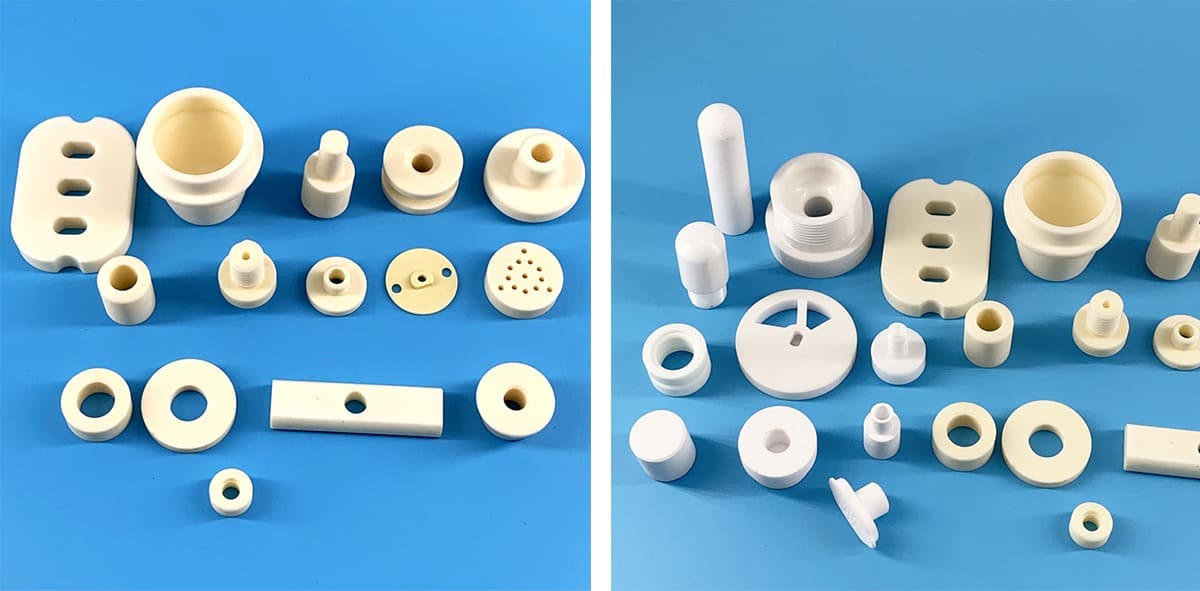
Sector-Specific Applications of Alumina Ceramics
Alumina ceramics are applied across various sectors due to their unique properties. Below are their key uses:
- Cutting Tools (Mechanical): Support high-speed machining of hard materials.
- Industrial Valves (Industrial): Provide durability in corrosive environments.
- Ceramic Substrates (Electronic/Power): Ensure insulation in electronic systems.
- Chemical Filler Balls (Chemical): Resist corrosion in chemical processing.
- Artificial Joints (Medical): Enable safe, long-term medical implants.
- Grinding Media (Architectural): Enhance efficiency in ceramic production.
- Aerospace Components (High-Tech): Withstand high temperatures in aerospace.
Performance factors by application.
The table below links key properties of alumina ceramics to their applications across various sectors.
Application | Sector | Key Property | Typical Value | Why It’s Important |
Cutting Tools | Mechanical | Hardness | Mohs 9 | Maintains durability in high-speed machining. |
Industrial Valves | Industrial | Chemical Stability | Weight Loss (HNO₃): 0.03 mg/cm²/day | Resists corrosion in industrial environments. |
Ceramic Substrates | Electronic/Power | Electrical Insulation | Volume Resistivity: >10¹⁴ ohm-cm | Ensures safety in electronic circuits. |
Chemical Filler Balls | Chemical | Wear Resistance | High | Withstands abrasive chemical processes. |
Artificial Joints | Medical | Biocompatibility | Inert | Safe for long-term medical implantation. |
Grinding Media | Architectural | Hardness | Mohs 9 | Optimizes grinding in ceramic production. |
Aerospace Components | High-Tech | Flexural Strength | 500 MPa (Hot-Pressed) | Maintains strength at high temperatures. |
Table Notes:
- Values reflect typical alumina properties (e.g., 99.5% Al₂O₃ data).
- Properties such as chemical stability and biocompatibility ensure performance across sectors.
Selection Notes and Related Materials
For alumina ceramic component selection, specify alumina grade or purity, dimensions, tolerance, surface finish, density, operating temperature, electrical requirement and chemical exposure. Related options include Alumina Ceramics, Technical Ceramics and the materials blog.
FAQ
Which industries use alumina ceramics? Common uses include electronics, automotive systems, chemical processing, industrial equipment, medical devices and high-temperature assemblies.
What information is needed to select an alumina ceramic part? Share the grade, dimensions, tolerance, surface finish, operating temperature, electrical needs, mechanical load and chemical environment.
Conclusion
Alumina ceramics, with their excellent hardness, wear resistance, and chemical stability, play a vital role in mechanical, industrial, electronic, chemical, medical, architectural, and high-tech sectors. Their adaptability ensures robust performance across diverse applications.
Heeger Materials is a leading manufacturer and supplier of high-quality alumina ceramic products in form of plates, sheets, rods, tubes, crucibles, substrates, and customized parts, offering customized solutions for various industrial and research applications.