

Master Alloys
- Products
- Deposition Materials
- Refractory Metals
- Rare Earth Materials
- Powder
- Technical Ceramics
- Lanthanum Hexaboride (LaB6) Materials
- Pyrolytic Boron Nitride (PBN) Products
- Boron Nitride (BN) Products
- Alumina Ceramics (Al2O3)
- Aluminum Nitride (AlN) Products
- Silicon Nitride (Si3N4) Ceramics
- Silicon Carbide (SiC) Ceramics
- Graphite Products
- Zirconia Ceramic
- MAX Phase Ceramic Materials
- Boron Carbide Ceramics (B4C)
- Magnesium Oxide Ceramics (MgO)
- Quartz Ceramics
- Macor Machinable Glass Ceramic
- Beryllium Oxide (BeO) Ceramics
- Piezoelectric Ceramics
- High Purity Materials
- Precious Metals
- Chemicals
- Crystals & Substrates
- Applications
- Other
Our master alloys are continuously cast by induction melting and alloying process with static mold or direct cooling (DC). Our main products are aluminum-based master alloys, magnesium-based master alloys, zinc-based master alloys, copper-based master alloys, and rare earth master alloys.
Master Alloys There are 169 products.
Subcategories

Magnesium Based Master...
Magnesium Based Master Alloys are the lightest structural and hence suitable for application within the automotive industry, which has increased attention to vehicle weight and fuel economy. Magnesium alloys supported by the Mg-Al system are studied extensively to be used in vehicles thanks to the load savings they supply and also for their excellent castability.

Aluminum Based Master...
Aluminum-based intermediate alloys refer to hundreds of millions of titanium boride particle clusters or titanium carbide particle clusters of different sizes, shapes, nucleation capabilities, and potentials, and aluminum-titanium compounds in aluminum-titanium-boron alloys, aluminum-titanium-carbon alloys or aluminum-titanium alloys.

Copper Based Master Alloy
Copper-based master alloys are produced for the copper and brass industry. The range includes alloys such as Copper-iron, Copper-manganese, Copper-boron and Copper-zirconium. They dissolve better than the corresponding pure metal or metals.

Nickel, Cobalt & Iron...
Nickel/cobalt/iron based master alloys are part of a series of sophisticated alloys developed specifically for the iron, stainless steel, special steel, and superalloy industries. The comprehensive range includes Nickel-magnesium and Ferro-zirconium as well as Nickel-niobium (Columbium) and Cobalt-boron.

Magnesium Calcium Master Alloy (Mg-Ca Alloy)
Magnesium Calcium (Mg-Ca) Master Alloy, made from magnesium and calcium, is ideal for casting due to its strong hereditary properties. Heeger Materials provides high-quality Magnesium Calcium Master Alloy in waffle ingot, rod, and shot forms at competitive prices, with customized options to meet specific requirements.

Magnesium Gadolinium Master Alloy (Mg-Gd...
Magnesium Gadolinium (Mg-Gd) Master Alloy, is made by melting metal magnesium and metal Gadolinium. The common alloy ratio is 20-70% magnesium, and the ratio can also be customized. Heeger Materials provides top-quality Magnesium Gadolinium (Mg-Gd) Master Alloy at a competitive price, with customized options to meet specific requirements.

Magnesium Manganese Master Alloy (Mg-Mn...
Magnesium Manganese (Mg-Mn) Master Alloy, known for its excellent weldability and corrosion resistance, has a strength limit of 210-280 MPa. Heeger Materials provides high-quality Magnesium Manganese Master Alloy in waffle ingot, rod, and shot forms at competitive prices, with customized options to meet specific requirements.

Magnesium Neodymium Master Alloy (Mg-Nd...
Magnesium Neodymium (Mg-Nd) Master Alloy is an alloy composed of alkaline earth metals and rare earth metals. It is used to improve the corrosion resistance and fatigue resistance of magnesium alloys. Heeger Materials provides high-quality Magnesium Neodymium (Mg-Nd) Master Alloy in waffle ingot, rod, and shot forms at competitive prices, with customized...
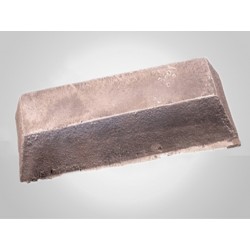
Magnesium Yttrium Master Alloy (Mg-Y Alloy)
Magnesium Yttrium Master Alloy is a casting alloy used as an additive for magnesium alloy material processing. Heeger Materials provides top-quality Magnesium Yttrium Master Alloy in waffle ingot, rod, and shot forms at competitive prices, with customized options to meet specific requirements.
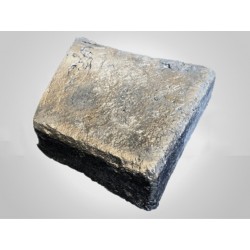
Magnesium Yttrium Gadolinium (Mg-Y-Gd)...
Magnesium Yttrium Gadolinium (Mg-Y-Gd) Master Alloy is a kind of ternary alloy. Rare earth has a good purifying effect on magnesium alloy melt, and it has the functions of purifying hydrogen and removing oxidized inclusions. Heeger Materials provides the best Magnesium Yttrium Gadolinium (Mg-Y-Gd) Master Alloy in the shape of Waffle Ingot, rod, and shot...
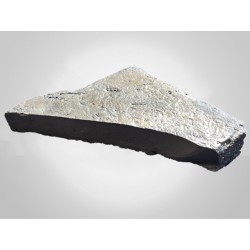
Magnesium Yttrium Neodymium Master Alloy...
Magnesium Yttrium Neodymium Master Alloy is a kind of ternary alloy, which is made by melting metal Magnesium, Yttrium, and Neodymium. Heeger Materials provides top-quality Magnesium Yttrium Neodymium Master Alloy in the shape of Waffle Ingot, rod, and shot at competitive prices, with customized options to meet specific requirements.

Magnesium Zirconium Master Alloy (Mg-Zr...
Magnesium-zirconium (MgZr) master alloy is a high-strength binary magnesium alloy system. The typical ratio is MgZr30 alloy. Heeger Materials offers high-quality Magnesium Zirconium Master Alloy in waffle ingot, notch bar, and shot forms at competitive prices, with customized options to meet specific requirements.

Aluminum Scandium Master Alloy (Al-Sc Alloy)
Aluminum Scandium Master Alloy is a new type of high-performance aluminum alloy. Scandium has an obvious grain refinement effect on aluminum alloy, which improves the strength of the aluminum alloy, inhibits recrystallization, strengthens the weld seam, and eliminates hot cracks in the weld seam. Heeger Materials offers the best Al-Sc Master Alloy at...

Vanadium Nitrogen (VN) Alloy
Vanadium nitrogen alloy, a new additive for micro-alloyed steel, can replace ferrovanadium. It improves steel's strength, toughness, ductility, thermal fatigue resistance, and weldability. Heeger Materials offers top-quality Vanadium Nitrogen at competitive prices, with customized options to meet specific requirements.

Magnesium Barium Master Alloy (Mg-Ba Alloy)
Magnesium Barium Master Alloy is made of melted Magnesium and Barium. Heeger Materials provides high-quality Magnesium Barium (Mg-Ba) Master Alloy in waffle ingot, rod, and shot forms at a competitive price. The common specifications are Mg-10Ba and Mg-5Ba.

Magnesium Lithium Master Alloy (Mg-Li Alloy)
Magnesium lithium master alloy for light-alloy development and processing. Confirm composition, form, quantity, intended process, packaging and certificate needs.
Master Alloys (Alloy material for casting) Description
A master alloy is a base metal like aluminum, nickel, or copper combined with a comparatively high percentage of one or two other elements. It's manufactured to be used as raw materials by the metals industry, and that’s why we call master alloy semi-finished products. Master alloys are produced in various shapes such as ingot, waffle plates, rods in coils and etc.
What are the master alloys?
The master alloy is an alloy material used for casting with precise composition through refining, so the master alloy is also called a casting master alloy. The reason why the master alloy is called "master alloy" is because it has strong genetic properties as the base material of casting, that is to say, many characteristics of the master alloy (such as carbide distribution, grain size, microscopic mirror image structure), Even including mechanical properties and many other characteristics that affect the quality of casting products) will be inherited to castings after remelting and pouring. Existing widely used master alloy materials include high-temperature alloy master alloys, heat-resistant steel master alloys, dual-phase master alloys, and conventional stainless steel master alloys.
Master Alloys Applications
There are lots of reasons for adding master alloys to a melt. One main application is composition adjustment, i.e. changing the composition of the liquid metal to realize the specified chemical specification. Another important application is structure control - influencing the microstructure of metal in the casting and solidification process so as to vary its properties. Such properties include mechanical strength, ductility, electrical conductivity, castability, or surface appearance. Counting on its application, a master alloy is usually also mentioned as a "hardener", "grain refiner" or "modifier".