
Alumina Ceramics (Al2O3)
- Products
- Deposition Materials
- Refractory Metals
- Rare Earth Materials
- Powder
- Technical Ceramics
- Lanthanum Hexaboride (LaB6) Materials
- Pyrolytic Boron Nitride (PBN) Products
- Boron Nitride (BN) Products
- Alumina Ceramics (Al2O3)
- Aluminum Nitride (AlN) Products
- Silicon Nitride (Si3N4) Ceramics
- Silicon Carbide (SiC) Ceramics
- Graphite Products
- Zirconia Ceramic
- MAX Phase Ceramic Materials
- Boron Carbide Ceramics (B4C)
- Magnesium Oxide Ceramics (MgO)
- Quartz Ceramics
- Macor Machinable Glass Ceramic
- Beryllium Oxide (BeO) Ceramics
- Piezoelectric Ceramics
- High Purity Materials
- Precious Metals
- Chemicals
- Crystals & Substrates
- Applications
- Other
Alumina ceramic is a ceramic material with alumina (Al2O3) as the main body for thick film integrated circuits. Alumina ceramics have good conductivity, mechanical strength and high temperature resistance.
Alumina Ceramic and ZTA Components
Alumina ceramic (Al2O3) is a versatile technical ceramic with high hardness, electrical insulation, wear re...
Alumina ceramic is a ceramic material with alumina (Al2O3) as the main body for thick film integrated circuits. Alumina ceramics have good conductivity, mechanical strength and high temperature resistance.
Alumina Ceramic and ZTA Components
Alumina ceramic (Al2O3) is a versatile technical ceramic with high hardness, electrical insulation, wear resistance and good thermal stability. It is used for insulators, tubes, plates, substrates, wear parts and structural ceramic components.
For applications that need improved toughness and impact resistance, compare zirconia-toughened alumina options such as ZTA ceramic sheets and ZTA ceramic discs.
Alumina Ceramics (Al2O3) There are 40 products.

Alumina (Al2O3) Ceramic Rod
Alumina (Al2O3) Ceramic is an excellent material for various applications such as CVD, ion plants, photolithography, and semiconductor parts. It offers high hardness, mechanical strength, temperature stability, thermal conductivity, insulation, and corrosion resistance. Heeger Materials provides top-quality Al2O3 Ceramic at competitive prices, offering...

Alumina (Al2O3) Ceramic Tube
Alumina (Al2O3) Ceramic is an excellent material for various applications such as CVD, ion plants, photolithography, and semiconductor parts. It offers high hardness, mechanical strength, temperature stability, thermal conductivity, insulation, and corrosion resistance. Heeger Materials provides top-quality Al2O3 Ceramic at competitive prices, offering...

Alumina (Al2O3) Ceramic Ring
Alumina (Al2O3) Ceramic Ring with configurable specification, quantity, documentation and protected packing options for technical material applications.

Alumina (Al2O3) Ceramic Washer
Alumina (Al2O3) ceramic washers boast high hardness, mechanical strength, temperature stability, thermal conductivity, insulation, and corrosion resistance. Ideal for seals and insulation, they find wide usage in electronics, high-temperature, and high-pressure environments. Heeger Materials offers top-quality Al2O3 Washers at competitive prices, offering...

Alumina (Al2O3) Ceramic Substrate
Alumina (Al2O3) Substrate has emerged as one of the most widely utilized materials for circuit boards, owing to its exceptional breaking strength, enhanced heat and insulation, and thermal conductivity. Heeger Materials provides top-quality Al2O3 Substrate at competitive prices, offering laser processing services for line cutting and hole punching on...

Alumina (Al2O3) Ceramic Crucible
Alumina (Al2O3) Ceramic Crucible offers high hardness, mechanical strength, temperature stability, thermal conductivity, insulation, and corrosion resistance, making it ideal for laboratory analyses and industrial applications. Heeger Materials offers top-quality Al2O3 crucibles at competitive prices, offering specialized and customized services to meet...

Alumina (Al2O3) Ceramic Boats
Alumina (Al2O3) Ceramic Boat offers high hardness, mechanical strength, temperature stability, thermal conductivity, insulation, and corrosion resistance, making them non-contaminating to most molten metals when used at high temperatures. Heeger Materials provides top-quality Al2O3 Boats at competitive prices, offering specialized and customized services...

Alumina (Al2O3) Ceramic Heater
Alumina (Al2O3) Ceramic Heaters are manufactured using unique metallization and ceramic lamination processes, offering advantages such as corrosion resistance, long lifespan, uniform temperature distribution, excellent thermal conductivity, and fast thermal compensation speed. Heeger Materials provides top-quality Al2O3 Heaters at competitive prices,...

Alumina (Al2O3) Ceramic Plate
Alumina (Al2O3) Ceramic Plates are specialized structural components made of alumina ceramic material. It offers high hardness, mechanical strength, temperature stability, thermal conductivity, insulation, and corrosion resistance. Heeger Materials provides top-quality Al2O3 Ceramic Plate at competitive prices, offering specialized and customized services...
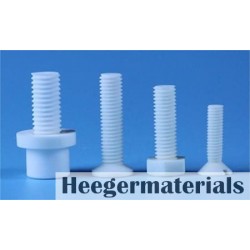
Alumina Fasteners, Al2O3 Ceramic
Alumina (Al2O3) Fasteners, crafted from high-performance alumina ceramics, are renowned for their exceptional insulation capabilities and superior heat resistance. Heeger Materials provides top-quality Al2O3 Fasteners at competitive prices, offering specialized and customized services to meet specific requirements.

Spherical Alumina (Al2O3) Powder, HMBAM...
Spherical Alumina (Al2O3) Powder is made by the high-temperature melting-sphere-jet method, and then sieving, purification, and other processes to get the final object. It exhibits a high spheroidization rate, filling ratio, and thermal conductivity. Heeger Materials offers top-quality Spherical Al2O3 Powder at competitive prices, with specialized and...

Alumina (Al2O3) Ceramic Ball
Alumina (Al2O3) Ceramic Ball is a high-performance ceramic filler with exceptional physical and chemical properties that remain stable even at temperatures as high as 1100℃. They find extensive applications as catalyst carriers, adsorbents, and desiccants. Heeger Materials provides top-quality Al2O3 Ceramic Ball at competitive prices, offering specialized...
Alumina Ceramics Description
Alumina ceramics can be divided into several application grades according to their alumina content, of which 99% alumina porcelain materials are used to make high-temperature crucibles, refractory furnace tubes, and special wear-resistant materials, such as ceramic bearings, ceramic seals, and water valve pieces; 95%-96% alumina porcelain is mainly used as corrosion-resistant, wear-resistant components, and circuit substrates.
Alumina Ceramics Properties
- Excellent electrical insulation (1 x 10 14 to 1 x 10 15 Ω cm).
- Medium to ultra-high mechanical strength (300 to 630 MPa).
- Very high compressive strength (2000 to 4000 MPa).
- High hardness (15 to 19 GPA).
- Medium thermal conductivity (20 to 30 W / MK).
- high corrosion and wear resistance.
- good abrasive properties.
- low density (3.75 to 3.95 g / cm3).
- Operating temperatures of 1000 to 1500°C without mechanical load.
- Bioinertia, food compatibility.