
Molybdenum
- Products
- Deposition Materials
- Refractory Metals
- Rare Earth Materials
- Powder
- Technical Ceramics
- Lanthanum Hexaboride (LaB6) Materials
- Pyrolytic Boron Nitride (PBN) Products
- Boron Nitride (BN) Products
- Alumina Ceramics (Al2O3)
- Aluminum Nitride (AlN) Products
- Silicon Nitride (Si3N4) Ceramics
- Silicon Carbide (SiC) Ceramics
- Graphite Products
- Zirconia Ceramic
- MAX Phase Ceramic Materials
- Boron Carbide Ceramics (B4C)
- Magnesium Oxide Ceramics (MgO)
- Quartz Ceramics
- Macor Machinable Glass Ceramic
- Beryllium Oxide (BeO) Ceramics
- Piezoelectric Ceramics
- High Purity Materials
- Precious Metals
- Chemicals
- Crystals & Substrates
- Applications
- Other
Molybdenum combines a high melting point of 2623°C, a density of 10.22 g/cm³, and high strength at elevated temperature, which makes it a standard choice for vacuum furnace parts, glass melting electrodes, EDM wire, thermal spray and semiconductor hardware.
Browse by form: molybdenum rod and bar, molybdenum plate, molybdenum sheet, molybdenum st...
Molybdenum combines a high melting point of 2623°C, a density of 10.22 g/cm³, and high strength at elevated temperature, which makes it a standard choice for vacuum furnace parts, glass melting electrodes, EDM wire, thermal spray and semiconductor hardware.
Browse by form: molybdenum rod and bar, molybdenum plate, molybdenum sheet, molybdenum strip and foil, molybdenum wire, molybdenum tube, molybdenum powder, molybdenum crucibles, TZM alloy products, molybdenum fasteners, molybdenum sputtering targets and custom molybdenum parts.
Molybdenum rod follows ASTM B387 and is available in pure molybdenum, TZM and MoLa grades. Tell us the grade, dimensions and quantity, and request a quote — Heeger Materials replies with price and availability within 24 hours.
Not sure about the weight of your molybdenum parts? Try our refractory metal weight calculator.
Molybdenum There are 61 products.

Molybdenum Rod & Bar | ASTM B387 Pure Mo &...
Molybdenum Rods & Bars in pure Mo, TZM, and MoLa alloys for vacuum furnaces, high-temperature heating elements, electrodes, structural parts, and machined components. Available in round and square forms with purity up to 99.99%, multiple surface finishes, custom dimensions, and tight tolerances. Request a quote for standard or custom sizes.

Molybdenum Tube | Pure Mo, TZM & MoLa Tubing
Molybdenum Tube, TZM Tube & MoLa Tube for high-temperature furnaces, thermocouple protection, sapphire crystal growth, electronic components, and vacuum applications. Available in 99.9%–99.99% purity with custom OD, ID, wall thickness, length, tolerances, and documentation. Send us your tube dimensions or drawing for a quote.

Molybdenum (Mo) Crucible | Custom...
Molybdenum Crucibles in pure Mo, TZM, and MoLa for high-temperature, vacuum, crystal-growth, and materials-processing applications. Available in 99.95%–99.99% purity, OD 10–500 mm and height 10–600 mm, with custom wall thickness, lids, shapes, fabrication methods, and tolerances. Send us your drawing for a quote.

Molybdenum (Mo) Wire | Pure Mo, EDM &...
Molybdenum Wire is available in black, cleaned, EDM, spray, and custom forms for high-temperature furnaces, electrodes, heating elements, wire cutting, electronic components, and thermal spraying. Available in 99.9%–99.99% purity with diameters from 0.18–3.0 mm and custom sizes upon request. Request a quote for standard or custom wire.

Molybdenum Sheet | Pure Mo, TZM & MoLa
Molybdenum Sheet in pure Mo, TZM, and MoLa alloys for high-temperature furnaces, vacuum equipment, semiconductor, electrical, and fabricated components. Available in 99.9%–99.99% purity with custom thickness, width, length, flatness, tolerances, and surface finish. Request a quote for standard or custom sizes.

Molybdenum Plate | Pure Mo, TZM & MoLa Alloy
Molybdenum Plate in pure Mo, TZM, and MoLa alloys for high-temperature furnace tooling, heat shields, vacuum components, electrodes, and precision-machined parts. Available in 99.9%–99.99% purity, thicknesses above 0.1875", widths up to 800 mm, and lengths up to 3200 mm with custom tolerances and surface finishes. Request a quote.

Molybdenum Disc & Square | Pure Mo, TZM &...
Molybdenum Discs & Squares in pure Mo, TZM, and MoLa for power semiconductor, thyristor, transistor, heat-sink, and electronic applications. Available in 99.9%–99.99% purity with custom diameter, thickness, flatness, parallelism, surface finish, and Ru, Rh, Ni, Ag, or Au coating options. Request a quote.

Molybdenum Lanthanum Alloy | Mo-La2O3 Alloy
Molybdenum Lanthanum (MoLa) Alloy, doped with lanthana for improved high-temperature performance, is available in various compositions like 0.3%, 0.6%, and 1.1% Lanthana. Heeger Materials provides top-quality Molybdenum Lanthanum Alloy products at competitive prices, offering customization to meet specific needs.

Molybdenum Squares | Pure Mo, TZM & Coated...
Molybdenum Squares in pure Mo, TZM, and MoLa for semiconductor, electronic, thermal-management, vacuum, and precision applications. Available in 99.95%–99.99% purity with custom thickness, width, length, flatness, parallelism, surface finish, and Ru, Rh, Ni, Ag, or Au coatings. Send your drawing for a quote.

Molybdenum (Mo) Powder
Molybdenum powder is commonly produced by reducing ammonium paramolybdate or calcined MoO3 with hydrogen. It serves as a key raw material for manufacturing molybdenum-based products using powder metallurgy techniques. Heeger Materials offers high-quality Molybdenum (Mo) Powder at competitive prices, allowing customization of purity levels and particle...
Spherical Molybdenum (Mo) Powder
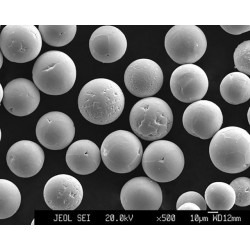
Spherical Molybdenum (Mo) Powder has a high level of sphericity and controlled grain size which make it the ideal powder for surface coating. Heeger Materials can provide top-quality Spherical Molybdenum Powder at competitive prices, allowing customization of purity levels and particle sizes to meet specific requirements.

Molybdenum Tray / Boat | Pure Mo, MoLa...
Molybdenum Trays/Boat, featuring a simple structure and cost-effectiveness, are commonly used in high-temperature furnaces for material melting. Heeger Materials offers a comprehensive range of options, including molybdenum trays, boats, and wires, all available at competitive prices. Customization is also available to cater to specific requirements.
Molybdenum Metal and Alloys
Molybdenum (Mo) is used principally as an alloying agent in steel, cast iron, and superalloys to reinforce hardenability, strength, toughness, and wear and corrosion resistance. To realize desired metallurgical properties, molybdenum, primarily within the sort of molybdic oxide or ferromolybdenum, is usually utilized in combination with or added to chromium, niobium, nickel, tungsten, manganese, niobium, nickel, tungsten, or other alloy metals. The flexibility of molybdenum in enhancing a spread of alloy properties has ensured a big role in contemporary industrial technology, which increasingly requires materials that are serviceable under high stress, expanded temperature ranges, and highly corrosive environments. Besides, as a refractory metal, molybdenum also finds significant usage in many chemical applications, including lubricants, catalysts, and pigments.
Molybdenum Atomic Diagram
.png)
Molybdenum Products
- Molybdenum Sheet/Plate
- Molybdenum Rod/Wire
- Molybdenum Tube
- Molybdenum Strip/Foil
- Molybdenum Crucible
- Molybdenum Powder
- Fabricated Molybdenum Products
Molybdenum Alloys
- TZM Alloy
- Mo-La Alloy
- MoCu Composites
- Mo-Nb Alloys
Molybdenum Properties
Atomic number | 42 | Atomic volume | 0.0153 [nm3] |
CAS number | 7439-98-7 | Density at 20 °C | 10.2 [g/cm3] |
Atomic mass | 95.94 | Crystal structure | body-centered cubic |
Melting point | 2,620°C | Lattice constant | 315 [pm] |
Boiling point | 4,639 °C | Abundance in the Earth's crust | 1.2 [g/t] |
Molybdenum Mechanical Properties
Molybdenum distinguishes itself with those unique properties: high melting point, high creep resistance, and low thermal expansion. The properties of the pure molybdenum could also be improved by alloying.
Molybdenum Chemical Properties
Molybdenum has extremely good resistance to corrosion by numerous acids, liquid metals, and molten glass, provided oxidizing agents are not present. Molybdenum is relatively inert in hydrogen, ammonia, and nitrogen up to about 1100°C.
Molybdenum Main Characteristics
- High melting point (2620°C)
- Low thermal expansion (4.9 X 10⁻⁶/K)
- High thermal conductivity (135 W/m·K)
- Low vapor pressure (2151 °C, 4.48 X 10⁻⁷ Pa)
- Excellent corrosion resistance against molten metals and glass
Molybdenum Mass Characteristics
- Symbol (Mo)
- Atomic Number (42)
- Atomic Weight (95.94)
- Density (10.2 g/cm3)
- Compressibility (36 micron 2/N at 293°C)
Molybdenum Alloys Compared to Pure Molybdenum
Comparable with pure Mo + higher than pure Mo ++ much higher than pure Mo - lower than pure Mo.Molybdenum Alloys Comparison Table
| Property | TZM | MHC | ML | Mo-ILQ | MY | MoRe | MoW |
|---|---|---|---|---|---|---|---|
| Alloying components (as a percent by weight) | 0.5% Ti 0.08% Zr 0.01 - 0.04% C | 1.2% Hf 0.05 - 0.12% C | 0.3% La2O3 0.7% La2O3 | 0.03% La2O3 | 0.47% Y2O3 0.08% CeO2 | 41% Re 47.5% Re | 30% W |
| Thermal conductivity | - | - | ∼ | ∼ | ∼ | - | - |
| Stability at room temperature | + | + | ∼ | ∼ | ∼ | + | + |
| High-temperature stability / Creep resistance | ++ (< 1400 °C) + (> 1400 °C) | ++ (< 1500 °C) + (> 1500 °C) | + (< 1400 °C) ++ (> 1400 °C) | + | + | + | + |
| Recrystallization temperature | + | ++ | ++ | + | + | + | + |
| Ductility after HT use | + | + | ++ | + | + | ++ | ∼ |
| Weldability | + | + | + | + | + | ++ | ∼ |