



Interparticle interactions play a central role in determining how Ceramic Powder behaves during packing, compaction, and sintering. These interactions govern load transfer, frictional resistance, energy dissipation, density gradients, and microstructural evolution. Whether Ceramic Powder is used in structural ceramics, electronic components, or high-temperature applications, the forces between particles influence defect formation, stress localization, crack initiation, and densification efficiency. This article provides a systematic exploration of how contact mechanics, friction, surface energy, thermal stresses, particle size, and shape anisotropy collectively control the overall behavior of Ceramic Powder systems.
At Heeger Materials Inc., we specialize in high-quality ceramic powder products, ensuring optimal performance for industrial and scientific applications.
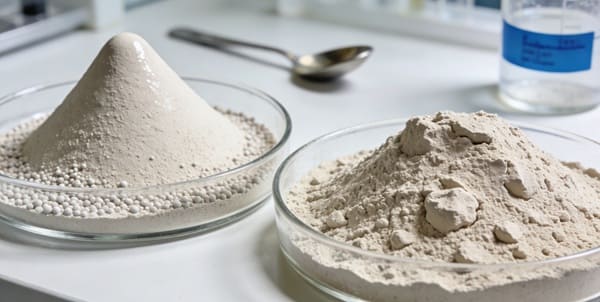
What Are Interparticle Interactions in Ceramic Powder?
Understanding interparticle interactions in Ceramic Powder is essential because these forces determine how particles touch, deform, and transmit energy under external loading. These interactions include mechanical contact, adhesion, friction, van der Waals forces, capillary actions, and electrostatic effects. Together, they define the stability of the powder bed, its flowability, and its response to compaction stresses. The table below summarizes the main types of interparticle forces and their typical magnitudes.
Main Interaction Types in Ceramic Powder
Interaction Type | Relative Strength | Typical Influence |
Mechanical contact force | High | Governs load transfer |
Frictional force | Medium–High | Affects compaction efficiency |
van der Waals attraction | Low–Medium | Important in fine powders |
Electrostatic force | Variable | Influences powder dispersion |
Capillary force | High (if moisture present) | Changes powder cohesion |
Understanding these interaction categories helps researchers link microscale forces to macroscale behaviors, such as density distribution and green body strength. As particle sizes decrease or surfaces become rougher, the contribution of adhesive forces increases, making the Ceramic Powder system more cohesive and less free-flowing.
Explore our high-quality ceramic powder products.
How Do Contact Modes Influence Ceramic Powder Behavior?
Different contact modes—point, line, and surface contacts—strongly modify the mechanical behavior of Ceramic Powder. Point contacts often generate stress concentrations, while line and surface contacts distribute loads more evenly. Contact geometry is also governed by particle shape, packing density, and the roughness of individual particles. Understanding these modes is essential for predicting how powders behave in pressing and sintering.
Typical Contact Modes in Ceramic Powder
- Point contact: Common in spherical particles; leads to sharp stress peaks.
- Line contact: Observed between elongated or polyhedral particles; moderate stress distribution.
- Surface contact: Dominant in plate-like or irregular particles; lowers local stress intensity.
- Multi-point contact: Found in mixed-size systems; improves load-sharing.
These contact modes explain why spherical powders are easy to pack but prone to stress concentration, while angular or plate-like particles can stabilize the contact network. A mixture of shapes often creates a more robust mechanical framework for Ceramic Powder compaction.
How Does Friction Affect Mechanical Response in Ceramic Powder?
Friction is one of the most significant parameters that control the behavior of ceramic powder during pressing. High friction causes energy dissipation, reducing effective stress transmission and slowing densification. Low friction improves sliding and rearrangement but may destabilize particle assemblies. The friction coefficient depends on surface roughness, material hardness, and chemical compatibility.
Effects of Friction on Ceramic Powder Compaction
Friction Level | Powder Response | Influence on Density |
Low friction | Easy rearrangement | Higher uniformity |
Medium friction | Balanced sliding | Moderate density |
High friction | Restricted movement | Density gradients increase |
Very high friction | Localized jamming | Risk of microcracks |
Friction also governs energy pathways in the system. As particles slide under load, part of the applied energy is consumed as frictional heat and mechanical wear, reducing the amount available for plastic deformation. This influences green body strength, cracking probability, and pore closure behavior during the sintering process.
Why Do Surface Energy Differences Matter in Ceramic Powder Systems?
Surface energy dictates adhesion between Ceramic Powder particles and significantly influences how powders agglomerate or disperse. When two materials with different surface energies interact, the interface may experience strong or weak bonding. High surface energy differences can enhance friction, stabilize contact networks, and reduce the formation of cracks.
Common Surface Energy Effects in Ceramic Powder
- Higher surface energy increases adhesion between particles.
- Greater surface energy mismatch enhances interfacial friction.
- Coated particles show reduced surface energy and better dispersion.
- Surface energy variations change pore shape and closure paths.
Understanding these effects is crucial when designing composite ceramic systems. Adjusting surface energy through coatings or additives helps improve uniformity in mixed-powder compaction and reduces stress concentrations in green and sintered bodies.
How Do Thermal and Mechanical Couplings Influence Ceramic Powder Interactions?
During sintering, Ceramic Powder is exposed to strong thermal gradients and external stresses. These thermal-mechanical couplings alter interparticle contact areas and generate transient stress peaks. Local temperature fluctuations also change material stiffness and diffusion rates, influencing bonding behavior at particle interfaces.
Thermal–Mechanical Effects in Ceramic Powder Sintering
Phenomenon | Cause | Influence |
Thermal expansion mismatch | Different particle types | Residual stresses |
Temperature gradients | Laser, SPS, or furnace processes | Non-uniform densification |
Creep deformation | High temperatures | Contact bonding |
Stress relaxation | Viscous flow near the melting point | Reduces peak stresses |
As temperatures rise, particles soften slightly, allowing stresses to redistribute and interfaces to bond more effectively. However, steep gradients may trigger cracking or non-uniform shrinkage. Understanding these interactions helps engineers optimize sintering schedules and avoid structural defects.
How Do Core–Shell and Composite Designs Modify Ceramic Powder Interactions?
Core–shell and composite Ceramic Powder structures are engineered to improve stress distribution, interparticle bonding, and thermal stability. By adjusting elastic modulus mismatch and interface properties, these powders enhance crack resistance and promote uniform densification.
How Composite Designs Improve Ceramic Powder Behavior
- Core–shell particles moderate stress concentrations.
- Elastic mismatch redirects crack propagation.
- Interfaces enhance diffusion bonding during sintering.
- Composite powders improve thermal shock resistance.
These design strategies also reduce interfacial debonding by smoothing stress gradients. In high-performance ceramics like Al₂O₃–SiC or ZrO₂-toughened systems, composite powders significantly improve fracture toughness and microstructural stability.
How Do Particle Size Distribution and Packing Patterns Affect Ceramic Powder Stress?
The statistical distribution of particle sizes strongly influences packing density, load paths, and stress fluctuations. Broad size distributions create more contact points but may increase stress variability. Narrow distributions offer predictability but may cause inefficient packing.
Influence of Particle Size Distribution on Ceramic Powder
Size Distribution | Packing Behavior | Stress Characteristics |
Narrow | Uniform packing | Predictable stresses |
Moderate | Balanced packing | Stable stress paths |
Broad | High packing density | Higher stress variance |
Multimodal | Maximum contact density | Complex load networks |
Packing patterns also affect compaction. Random dense packing creates heterogeneous stress chains, while engineered packing, such as layered or oriented structures, improves uniformity and reduces local stress amplification.
How Do Shape and Anisotropy Influence Ceramic Powder Interactions?
Particle shape introduces anisotropy in contact mechanics. Spherical particles mainly form point contacts, while plate-like and polyhedral particles generate extended contact regions. Shape anisotropy modifies friction paths, stress concentration tendencies, and rearrangement mechanisms.
Effects of Particle Shape in Ceramic Powder
- Spherical particles create uniform but high-peak stresses.
- Polyhedral particles increase friction and reduce sliding.
- Plate-like particles form anisotropic force chains.
- Irregular shapes improve shear resistance.
Shape anisotropy also influences flaw evolution. Thin plate-like particles often experience stress localization across their thickness, while angular particles create strong load-bearing frameworks. Optimizing shape combinations is key to designing powders for better compaction and sintering performance.
Request a custom quote for our ceramic powder products.
FAQ
Question | Answer |
What mainly controls Ceramic Powder flowability? | Friction, adhesion, and particle shape. |
Why does particle size matter? | Smaller particles increase adhesion and reduce flow. |
How can agglomeration be reduced? | Surface coatings and optimized mixing. |
Does thermal gradient affect stress? | Yes, it creates transient stress peaks during sintering. |
Conclusion
Interparticle interactions fundamentally determine how Ceramic Powder systems behave during key processes such as packing, compaction, and sintering. Factors like contact mode, friction, surface energy, temperature gradients, composite design, particle size distribution, and shape anisotropy all work together to define stress transfer and structural evolution. A deep understanding of these forces allows engineers to design powders with improved densification behavior, reduced defects, and superior final properties. As advanced ceramics continue to evolve, the ability to control interparticle interactions will become increasingly important for optimizing both processing efficiency and material performance.
Looking for high-quality ceramic powder products? Contact us today!