


Quick answer: Hexagonal boron nitride (h-BN), commonly termed "white graphite," is a layered synthetic ceramic combining high in-plane thermal conductivity (up to 300–400 W/m·K for single crystal layers; 30–120 W/m·K in polycrystalline hot-pressed blocks), exceptional dielectric strength (>20–40 kV/mm), a wide direct electronic bandgap (~5.9 eV), low friction coefficient (~0.15–0.25), and non-wetting behavior against molten non-ferrous metals. Unlike conductive graphite or electrically insulating alumina and aluminum nitride, h-BN uniquely balances high heat spreading with true electrical insulation, chemical inertness up to 900°C in air and over 2000°C in vacuum or inert atmospheres, and superior machinability using standard carbide shop tools.
Modern thermal engineering and high-temperature metallurgy require materials that can isolate electrical voltages while conducting high heat fluxes in corrosive or oxygen-depleted operating environments. Hexagonal boron nitride fulfills this niche across semiconductors, vacuum furnaces, molten metal processing, and polymer composites. Understanding the fundamental material science of h-BN helps design engineers specify the correct purity, grain structure, orientation, and binder chemistry for critical applications.
Crystal Structure and Physical Properties of "White Graphite"
Hexagonal boron nitride consists of equal numbers of boron and nitrogen atoms arranged in a sp2-hybridized honeycomb hexagonal lattice. The planar B-N bonds within each sheet are strong covalent bonds with partial ionic character (due to the electronegativity difference between nitrogen and boron). In contrast, adjacent layers are held together by weak van der Waals forces in an AA' stacking sequence, where boron atoms in one sheet sit directly over nitrogen atoms in the adjacent sheet.
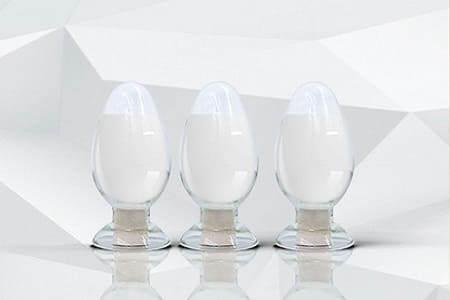
Figure 1: High-purity hexagonal boron nitride powder exhibiting submicron platelet morphology for thermal fillers, dry lubricants, and ceramic sintering feedstocks.
This structural arrangement dictates its anisotropic behavior and core physical attributes:
- Low Friction and Self-Lubrication: Similar to graphite, the weakly bonded basal planes readily shear under low tangential stress. However, while graphite requires moisture or ambient humidity to facilitate interplanar slip, h-BN maintains its low friction coefficient (~0.15 to 0.25) in dry nitrogen, high vacuum, and high-altitude space environments.
- High Sublimation Point and Thermal Endurance: Rather than melting at atmospheric pressure, h-BN sublimes at approximately 2900°C to 3000°C. It resists oxidation in air up to 850°C to 900°C (above which a protective molten B2O3 surface layer forms), and operates continuously up to 1800°C in vacuum and 2000°C in argon or nitrogen atmospheres.
- Thermal Conductivity Coupled with Electrical Insulation: Covalent in-plane B-N bonds support high phonon-dominated heat conduction. Because h-BN features a wide bandgap of ~5.9 eV and zero free conduction electrons, it acts as an electrical insulator with a volume resistivity exceeding 1014 Ω·cm at room temperature.
- Chemical Inertness and Non-Wetting: Hexagonal boron nitride is chemically non-reactive toward most organic solvents, acids, and halogens. Crucially, it is not wetted by molten aluminum, zinc, magnesium, copper, glasses, or cryolite fluxes, preventing molten metal adhesion and chemical erosion.
Hexagonal vs. Cubic Boron Nitride: Structural and Property Clarification
In technical literature, boron nitride is occasionally conflated across its allotropes. It is essential to distinguish hexagonal BN (h-BN) from cubic BN (c-BN):
| Property | Hexagonal Boron Nitride (h-BN) | Cubic Boron Nitride (c-BN) |
|---|---|---|
| Crystal Structure | sp2 Layered Hexagonal (Graphite analog) | sp3 Tetrahedral Zinc Blende (Diamond analog) |
| Mohs / Knoop Hardness | Mohs 1–2 (Soft, lubricating, machinable) | Knoop ~4500 kg/mm2 (Superhard cutting material) |
| Primary Function | Heat dissipation, electrical insulation, release agent | Abrasive wheels, precision machining of hardened steels |
| Machinability | Freely machinable with ordinary drill bits and end mills | Non-machinable; requires diamond grinding or EDM |
For high-hardness cutting tool applications, review our guide on why to use cubic boron nitride (c-BN). For comprehensive thermal and electrical data, explore our analysis of boron nitride ceramics properties.
Key Industrial and High-Technology Applications of h-BN
The convergence of dielectric strength, thermal transport, thermal shock resistance, and chemical non-wetting enables hexagonal boron nitride to serve across four primary industrial domains:
1. Semiconductor, Microelectronics, and Thermal Management
In power modules, automotive inverters, and high-frequency communication electronics, electrical insulation must coexist with efficient heat dissipation. Hexagonal boron nitride is widely incorporated as a functional filler in silicone thermal interface materials (TIMs), gap pads, potting resins, and copper-clad laminates. Its non-conductive nature prevents electrical short-circuiting across high-density transistor gates while spreading heat away from semiconductor junctions. Furthermore, atomically flat h-BN monolayers serve as premium dielectric substrates for graphene and 2D optoelectronic devices.
2. Vacuum Furnaces and High-Temperature Fixtures
Hot-pressed solid h-BN ceramics serve as structural insulators, heating element supports, plasma arc insulators, and thermocouple protection sheaths in high-temperature vacuum furnaces. Due to an exceptionally low coefficient of thermal expansion (~1 x 10⁻⁶/K) and high thermal conductivity, h-BN boasts outstanding thermal shock resistance. Components can withstand repeated thermal cycling from 1500°C to room temperature without catastrophic cracking or spalling.
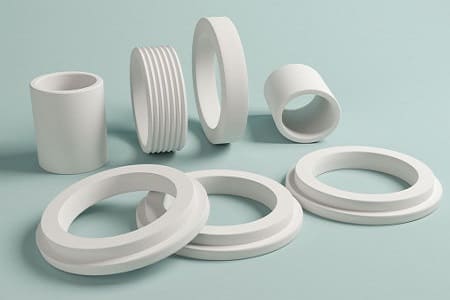
Figure 2: Precision-machined solid h-BN components, including crucibles, sealing rings, and insulating bushings tailored for semiconductor and metallurgical thermal hardware.
3. Molten Metal Handling and Continuous Casting
Because molten non-ferrous metals cannot wet or adhere to h-BN surfaces, it is the premier refractory material for continuous casting break rings, nozzles, side dams, transfer ladles, and foundry spray coatings. Boron nitride coatings applied to graphite or cast iron molds prevent decarburization, eliminate molten aluminum contamination, and ensure pristine ingot surface finishes.
4. High-Temperature and Clean-Room Dry Lubrication
In aerospace mechanisms, furnace conveyors, glass container manufacturing, and clean-room equipment where oil or grease lubricants would volatilize, carbonize, or outgas into high-vacuum systems, h-BN powders and aerosol sprays function as clean, non-toxic, chemically pure dry film lubricants operating reliably above 800°C.
Engineering Sourcing and Material Selection Framework
When selecting hexagonal boron nitride products, procurement and engineering teams should identify the product form and verify key chemical and physical metrics:
| Product Form | Critical Technical Variables | Key Quality & Process Indicators | Typical Engineering Application |
|---|---|---|---|
| h-BN Powders | Purity (≥99% to 99.8%), D50 Particle Size (0.5 to 30 μm), Specific Surface Area (BET) | Soluble B2O3 < 0.1–0.2%, moisture < 0.5%, platelet aspect ratio | Polymer thermal fillers, cosmetics, dry lubricant sprays, sintering raw materials |
| Hot-Pressed h-BN (Binderless / Pure) | Density (~1.90–2.00 g/cm3), B2O3 content, grain orientation | Maximum service temperature in inert gas (>2000°C), vacuum stability | Semiconductor vacuum furnace insulators, ion source parts, PVD deposition fixtures |
| Composite h-BN (AlN, ZrO2, SiC blends) | Secondary phase proportion, flexural strength (>150 MPa), thermal shock resistance | Erosion resistance against molten steel/titanium, mechanical toughness | Horizontal continuous casting break rings, molten steel nozzles, high-wear thermal seals |
| Pyrolytic Boron Nitride (PBN) | CVD chemical vapor deposition, high density (>2.15 g/cm3), 99.99% purity | Zero binder, zero open porosity, high dielectric breakdown (>100 kV/mm) | MBE effusion cell crucibles, OLED evaporation boats, crystal growth hardware |
Frequently Asked Questions
| Question | Technical Answer |
| Why is hexagonal boron nitride known as "white graphite"? | Hexagonal boron nitride shares an identical layered hexagonal crystal structure with graphite, exhibiting low friction, self-lubricating characteristics, high thermal conductivity, and a smooth plate-like tactile feel. However, because it lacks delocalized π-electrons, it appears pure white and functions as an electrical insulator rather than an electrical conductor. |
| Can hexagonal boron nitride be machined using conventional workshop tools? | Yes. Hot-pressed solid h-BN ceramics exhibit low hardness and a layered microstructure that shears smoothly without microcracking. It can be machined into complex geometries, fine threads, and tight-tolerance bushings using standard high-speed steel (HSS) or tungsten carbide cutting tools without diamond tooling. |
| What is the maximum operating temperature of h-BN in different atmospheres? | In ambient oxidizing air, h-BN begins surface oxidation around 850°C to 900°C, generating molten boric oxide (B2O3). In high vacuum, it remains thermally stable up to approximately 1800°C. In inert atmospheres such as nitrogen or argon, h-BN operates safely up to 2000°C to 2100°C before sublimation begins. |
| How does residual boric oxide (B2O3) affect hot-pressed h-BN performance? | Residual boric oxide acts as a sintering liquid-phase aid during hot pressing. However, if residual B2O3 is too high (>0.5%), it can absorb ambient moisture, form orthoboric acid, cause component swelling or surface dusting, and melt prematurely above 450°C in high-temperature vacuum environments. High-temperature grades require low-binder or diffusion-purified compositions. |
Material Selection and Technical Procurement
Selecting the optimal boron nitride grade requires balancing thermal conductivity, mechanical rigidity, atmosphere compatibility, and dielectric insulation. Explore our verified portfolio of Boron Nitride (BN) Products, Hexagonal Boron Nitride (HBN) Products, and Technical Ceramics. For customized drawing-based ceramic machining, particle size distributions, or batch certificates of analysis, contact our engineering team via the Heeger Materials contact page.