



Understanding which Silicon Nitride powder parameters control the thermal expansion behavior of sintered components is essential for designing advanced ceramic parts used in high-temperature, high-precision environments. Although the intrinsic thermal expansion coefficient (CTE) of Si₃N₄ is mainly determined by its strong covalent bonds, the actual CTE of final components depends heavily on powder characteristics such as purity, α-phase content, particle size, specific surface area, and additive distribution. These powder features indirectly shape the microstructure, the amount of glassy grain-boundary phase, and the degree of densification, all of which collectively influence the CTE.
This article examines which powder parameters matter, why they matter, and how they affect microstructural evolution, offering structured insights supported by data tables, scientific logic, and a smooth flow between sections.
At Heeger Materials Inc., we specialize in high-quality silicon nitride powder products, ensuring optimal performance for industrial and scientific applications.
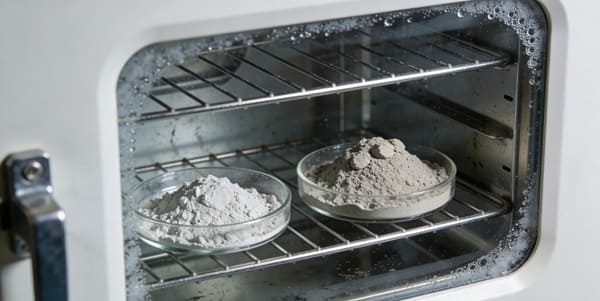
What Is the Relationship Between Silicon Nitride Powder and Thermal Expansion Behavior?
Before exploring individual parameters, it is important to clarify how Silicon Nitride Powder relates to the final thermal expansion behavior. Silicon nitride’s intrinsic CTE is relatively stable, but microstructural variations introduced during processing can shift the measured values. Powder characteristics influence the formation of glassy phases, grain morphology, and porosity—all factors that modify the average CTE.
The table below summarizes the mechanisms connecting powder indicators with thermal expansion performance.
Powder Parameters and Their Microstructural Effects on CTE
Powder Parameter | Microstructural Effect | Impact on CTE |
Purity / Oxygen Levels | Amount of grain-boundary glass | Higher glass increases CTE |
α-Phase Content | β-grain formation and uniformity | Higher uniformity stabilizes CTE |
Particle Size Distribution | Densification & porosity levels | Lower porosity increases CTE accuracy |
Specific Surface Area | Sintering activity & oxidation tendency | Balanced SSA stabilizes CTE |
Additive Distribution | Grain-boundary chemistry | Alters overall CTE trend |
After reviewing these general relationships, the next sections dive deeper into each parameter using data-driven explanations and tables.
Explore our high-quality silicon nitride products.
How Does Powder Purity Influence the Thermal Expansion Behavior of Silicon Nitride Components?
The purity of Silicon Nitride Powder—especially metal impurities and oxygen content—directly influences the formation of glassy phases during sintering. Even small amounts of Fe, Ca, or Al can react with sintering additives to form silicate phases with much higher thermal expansion than Si₃N₄ crystals. Oxygen content (mostly as surface SiO₂) also reacts with additives, increasing the volume of glassy grain boundaries.
Before examining specific impurity thresholds, consider the typical impurity–CTE relationship.
Influence of Powder Purity on Thermal Expansion Coefficient
Purity Level | Oxygen Content (wt%) | Expected Glass Phase | CTE Influence |
≥ 99.9% | < 0.5% | Minimal | CTE close to intrinsic β-Si₃N₄ values |
99.5–99.8% | 0.5–1.0% | Moderate | Slight CTE increase |
< 99.5% | > 1.0% | High | Noticeably higher and less stable CTE |
Maintaining high purity and low oxygen is therefore essential for consistent thermal expansion performance.
Why Does the alpha-Phase Content of Silicon Nitride Powder Affect Thermal Expansion?
Silicon Nitride Powder exists in α-Si₃N₄ and β-Si₃N₄ forms. During liquid-phase sintering, α dissolves and reprecipitates as elongated β grains. The completeness of this α→β transformation determines the uniformity and isotropy of the final microstructure. A more uniform β-grain network leads to more predictable and stable thermal expansion behavior.
The following table illustrates typical correlations.
Effect of α-Phase Content on β-Grain Development and CTE Stability
α-Phase Content (%) | β-Grain Morphology | Degree of Anisotropy | CTE Stability |
≥ 90% | Fully developed elongated β grains | Low | High |
60–80% | Mixed grain morphology | Moderate | Medium |
< 60% | Incomplete β transformation | High | Low |
High α-phase content promotes structural consistency and improves thermal expansion predictability.
How Do Particle Size and Distribution Influence Thermal Expansion Behavior?
Particle size determines densification efficiency during sintering. Fine, uniformly distributed powders sinter more completely, reducing residual porosity. Since pores do not expand significantly with temperature, their presence lowers the measured CTE.
Before evaluating data, note that D50 and D90/D10 ratio are the most common indicators of powder uniformity.
Particle Size Indicators and Their Effect on Final CTE
Parameter | Typical Range | Microstructural Effect | CTE Trend |
D50 ≤ 0.5 μm | High activity | High density, minimal pores | CTE close to intrinsic |
D50 = 0.5–1 μm | Moderate activity | Some residual pores | Slight deviation |
D90/D10 ≤ 3 | Narrow distribution | Microstructure uniform | Stable CTE |
D90/D10 > 5 | Broad distribution | Uneven densification | CTE variability |
A well-balanced particle size distribution improves densification and stabilizes thermal expansion behavior.
How Does Specific Surface Area (SSA) Affect Thermal Expansion of Silicon Nitride Ceramics?
SSA determines the reactivity of Silicon Nitride Powder. While high SSA increases sintering activity, it also increases surface oxidation, introducing more SiO₂ that converts to glassy phases. A balanced SSA is therefore needed: high enough for densification but low enough to avoid excessive oxidation.
The table below shows typical SSA–CTE relationships.
SSA Influence on Sintering Behavior and Thermal Expansion
SSA (m²/g) | Advantages | Limitations | Impact on CTE |
8–12 | Good activity, moderate oxidation | Balanced | Stable CTE |
12–18 | High activity | Higher oxygen | Slight CTE increase |
> 18 | Excessive oxidation | Excess glass | Noticeable CTE increase |
Optimizing SSA is critical for controlling microstructural glass content.
What Role Do Sintering Additives Play in Thermal Expansion Behavior?
Sintering additives like Y₂O₃ or MgO help achieve densification but also change grain-boundary chemistry. The type, amount, and distribution of additives determine how much glass is formed and how it spreads across grain boundaries.
Before looking at specific additive behaviors, recall that glass phases generally have higher CTE than Si₃N₄.
Common Additives and Their Influence on CTE
Additive | Typical Use (wt%) | Glass Formation Tendency | CTE Impact |
Y₂O₃ | 2–8 | High | Increases CTE slightly |
1–4 | Moderate | Minimal impact | |
1–3 | High | Noticeable increase | |
Rare-earth oxides | 1–6 | Variable | Depends on chemistry |
Choosing low-expansion additives and optimizing their distribution helps minimize unwanted CTE shifts.
Request a custom quote for our silicon nitride products.
How Do Microstructural Factors Derived from Silicon Nitride Powder Affect the Measured CTE?
The microstructure of sintered silicon nitride is defined by the powder parameters discussed above. Uniform β grains, low porosity, and controlled glass phases lead to CTE values close to the intrinsic value of β-Si₃N₄ (~2.9–3.2 ×10⁻⁶/K).
The table summarizes how microstructural features influence the measured CTE.
Microstructure–CTE Relationship in Silicon Nitride Ceramics
Microstructural Feature | Origin | Impact on CTE |
High density | Fine, uniform powder | Moves CTE toward intrinsic values |
Low porosity | High sintering activity | Stabilizes CTE |
Controlled glass phase | Low oxygen content | Prevents CTE increase |
Uniform β grains | High α-phase powder | Reduces anisotropy |
High-quality powder leads to microstructures that support stable and predictable thermal expansion.
How Do Silicon Nitride Powder Parameters Compare With Other Ceramic Powders in Thermal Expansion Behavior?
Comparing Silicon Nitride Powder with materials like alumina or zirconia helps illustrate how powder quality influences thermal expansion. Silicon nitride has a lower intrinsic CTE than most ceramics, but poor powder quality can bring its CTE closer to these other materials.
This table provides a comparison.
CTE Comparison Across Ceramics with Powder Quality Considerations
Material | Intrinsic CTE (×10⁻⁶/K) | Sensitivity to Powder Quality | Notes |
Si₃N₄ | 2.9–3.2 | High | Glass phases increase CTE |
Al₂O₃ | 7.5–8.3 | Moderate | Grain size affects CTE |
ZrO₂ | 10–11 | High | Phase transformation affects CTE |
SiC | 4.0–4.2 | Low | Less sensitive to impurities |
Silicon nitride is more sensitive to powder quality than most ceramics due to its covalent bonding and glass-phase interactions.
What Are the Future Trends in Silicon Nitride Powder Optimization for Controlling Thermal Expansion?
Future improvements in powder engineering will continue to enhance CTE control. Advances include ultra-low-oxygen Si₃N₄ powders, engineered α-phase transformation pathways, and additive-free sintering strategies. Emerging nano-powders also promise more reliable densification, although oxidation remains a challenge.
The following list summarizes future development directions:
Emerging Trends in Silicon Nitride Powder for CTE Control
- Production of ultra-pure Si₃N₄ powders (<0.3% oxygen)
- Grain-boundary glass elimination through rare-earth substitution
- Nano-structured α-Si₃N₄ engineered for controlled β-grain development
- Hybrid additives designed to reduce CTE variance
- AI-optimized powder mixing and sintering parameter prediction
The future of CTE control lies in precise powder engineering and advanced microstructural design.
FAQ
Question | Answer |
Does oxygen content increase CTE? | Yes. Oxygen forms glassy phases with higher CTE. |
What α-phase content is recommended? | Typically ≥ 90% for stable β-grain microstructures. |
Does particle size influence CTE? | Indirectly. It affects densification and porosity. |
How can CTE variability be minimized? | Use high-purity, fine, uniform α-phase powder. |
Do additives change CTE? | Yes. Additives form glass phases that may raise CTE. |
Conclusion
The thermal expansion behavior of silicon nitride components is not determined by the material’s intrinsic properties alone but is deeply influenced by Silicon Nitride Powder parameters. Purity, α-phase content, particle size distribution, SSA, additive chemistry, and resulting microstructure all collectively shape the final CTE. By optimizing these powder characteristics, manufacturers can achieve sintered components with thermal expansion values close to the intrinsic β-Si₃N₄ level—ensuring stability, reliability, and performance in demanding ceramic applications.
Looking for high-quality silicon nitride product? Contact us today!