



The stress distribution behavior of Ceramic Powder particles plays a crucial role in sintering quality, mechanical performance, and the reliability of advanced ceramic components. Different particle shapes—such as spherical, polyhedral, and plate-like geometries—respond to external loads in fundamentally different ways due to variations in curvature, symmetry, and contact geometry. Understanding these stress patterns helps engineers design powders that densify predictably, resist microcrack formation, and maintain structural integrity during forming and firing. This article explores how particle shape affects local stress, interparticle force transmission, compaction behavior, and downstream ceramic performance, using a scientific, SEO-friendly structure tailored for ceramic engineering applications.
At Heeger Materials Inc., we specialize in high-quality ceramic powder products, ensuring optimal performance for industrial and scientific applications.
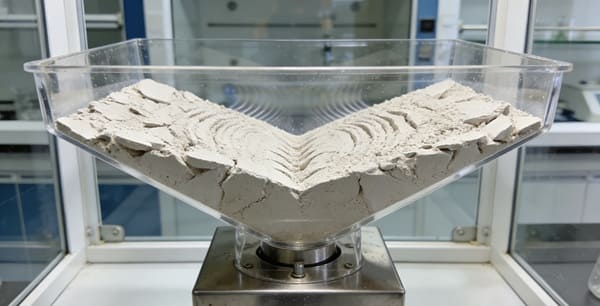
What Is Ceramic Powder and Why Does Its Shape Affect Stress Distribution?
Ceramic Powder consists of micron- or submicron-scale particles whose geometry determines how forces propagate within a powder compact. Particle shape influences contact area, local curvature, mechanical symmetry, and load transfer pathways during pressing, shearing, or thermal shrinkage. Because stress concentration governs defect evolution, crack initiation, and microstructural uniformity, understanding shape-dependent stress behavior is essential for optimizing powder processing.
To better understand the scope of Ceramic Powder, it can be categorized based on chemical composition and material type, as shown below:
Ceramic Powder Type | Examples |
Oxide | |
Nitride | Silicon Nitride, Aluminum Nitride, Boron Nitride |
Carbide | Silicon Carbide, Boron Carbide, Titanium Carbide |
Boride | Titanium Boride, Zirconium Boride, Hafnium Boride |
Silicate | Mullite, Sialon |
Ferrite | Manganese-Zinc Ferrite, Nickel-Zinc Ferrite |
Composite | ZTA (Zirconia-Toughened Alumina), SiC-ZrO2 composites |
Key Factors Linking Particle Shape and Stress Behavior
- Particle curvature and symmetry influence peak stress locations.
- Contact area variation modifies interparticle force transmission.
- Complex geometries produce higher stress gradients and localized concentration.
- Shape-driven stress differences affect densification kinetics and microcrack probability.
After considering these factors, it becomes clear that particle geometry is not merely a geometric descriptor but a functional mechanical parameter. The shape defines how a particle deforms elastically or plastically, how load paths evolve within the compact, and how microdefects nucleate during forming. As a result, Ceramic Powder shape selection is a critical early step in achieving predictable ceramic performance.
Explore our high-quality ceramic powder products.
How Does Spherical Ceramic Powder Distribute Stress Under Load?
Spherical Ceramic Powder is widely used because its symmetry produces stable and predictable stress patterns. When a compressive load is applied, stress tends to distribute evenly, decreasing radially from the center to the surface. This uniformity greatly reduces the likelihood of premature microcrack formation and enhances packing density uniformity.
Stress Distribution Characteristics in Spherical Ceramic Powder
Behavior | Description |
Stress symmetry | Axially symmetric around the loading direction |
Peak stress | Highest at the particle center under compressive load |
Stress gradient | Smooth radial reduction from core to surface |
Crack tendency | Low due to minimal stress concentration |
Spherical particles are therefore excellent for applications requiring stable compaction and predictable densification. Their smooth stress profile allows consistent transmission of external loads across a powder bed, lowering defect formation. However, their low surface activation may reduce local contact pressures, which can be a limitation for certain sintering pathways.
How Do Polyhedral Ceramic Powder Particles Create Stress Concentration?
Polyhedral Ceramic Powder shapes—such as cubes, octahedra, and hexagonal prisms—produce sharp transitions in curvature, causing local stress spikes. Edges, corners, and facet intersections act as amplification zones where peak stresses can exceed those in spherical particles by several folds. These concentrations become preferential sites for microcrack initiation, especially during high-pressure forming.
Stress Behavior in Polyhedral Ceramic Powder
- Sharp edges intensify stress concentration under load.
- Flat faces transmit load more directly, creating uneven force pathways.
- Corners produce high stress gradients that accelerate localized damage.
- Stress patterns vary greatly with the number of facets in the geometry.
Although polyhedral particles may introduce mechanical instability, they also create stronger interparticle contacts during sintering. Their geometric features can improve activation energy at interfaces, enabling densification when properly controlled. Thus, while polyhedral shapes raise mechanical risks, they also offer functional benefits in specific ceramic processing routes.
How Do Flaky-Like Ceramic Powder Particles Exhibit Anisotropic Stress Behavior?
Flaky-like Ceramic Powder geometries generate highly anisotropic stress fields due to their extreme aspect ratios. When compressed perpendicular to the plane, intense stress builds near the top and bottom surfaces. In contrast, parallel loading spreads more evenly through the layered structure. The disparity leads to direction-dependent mechanical responses.
Stress Characteristics of Flaky-Like Ceramic Powder
Parameter | Characteristic |
Aspect ratio effect | Higher aspect ratio increases stress anisotropy |
Thickness direction stress | Peaks at surface; rapid gradient through thickness |
Layer-parallel stress | More uniform spreading along the plane |
Weak direction | The through-thickness direction is prone to crack initiation |
Flaky-like particles may experience lower critical yielding thresholds than spherical ones, especially when aspect ratios exceed 5:1. Engineers must account for this behavior because it lowers forming pressures, affects compaction uniformity, and influences crack propagation patterns. When aligned properly, however, Flaky-like particles can enhance mechanical directionality in engineered ceramics.
How Do Interparticle Contacts Change with Ceramic Powder Shape?
The number, size, and orientation of contact points between Ceramic Powder particles influence force transmission. Spherical particles create predictable, single-point Hertzian contacts, whereas polyhedral and plate-like shapes introduce multi-contact surfaces that dramatically alter stress patterns.
Shape Effects on Interparticle Contacts
- Spherical: Single, circular contacts with stable stress distribution.
- Polyhedral: Multiple flat-face contacts producing strong local pressures.
- Plate-like: Large-area contacts with constrained directional stress spreading.
- Mixed geometries: Complex contact networks with heterogeneous force pathways.
These contact variations are fundamental to how particle assemblies compact and densify. Multicontact systems strengthen load-bearing but increase stress heterogeneity. Conversely, uniform contacts favor predictable shrinkage. Powder engineers must select particle shapes that align with target mechanical properties and forming conditions.
Why Does Ceramic Powder Shape Affect Compaction Behavior?
During die pressing, isostatic pressing, or extrusion, stress distribution governs how particles rearrange and deform. Spherical particles pack uniformly and rearrange easily, whereas angular particles resist rotation and interlock. Plate-like particles stack in preferential orientations, producing regions of uneven density.
Compaction Behavior vs. Particle Shape
Particle Shape | Compaction Behavior |
Spherical | High packing efficiency, smooth rearrangement |
Polyhedral | Interlocking effects reduce flow and create density variations |
Flaky-like | Preferential alignment causes directional density gradients |
Irregular | Unpredictable compaction; high stress heterogeneity |
Because densification uniformity directly affects final ceramic quality, understanding shape-compaction relationships helps engineers avoid warping, cracking, and nonuniform shrinkage during sintering. Selecting the correct shape is therefore essential for stable forming behavior.
How Does Ceramic Powder Shape Influence Microcrack Formation?
Microcracks often originate in regions where stress gradients exceed local material strength. Polyhedral particles exhibit stress peaks at corners, while plate-like particles crack through the thickness direction. Spherical particles produce fewer microcracks due to uniform stress spreading.
Shape-Dependent Microcrack Mechanisms
- Spherical: Rare microcracks due to smooth stress fields.
- Polyhedral: Crack initiation at edges and corners under high load.
- Flaky-like: Thickness-direction cracking due to anisotropic stresses.
- Mixed shapes: Interaction effects increase defect probability.
Understanding these mechanisms allows materials scientists to design powders that minimize early-stage fracture, increasing reliability and lowering reject ratios in industrial production.
How Do Ceramic Powder Shapes Affect Sintering Kinetics?
During sintering, stress distribution influences how particles bond, grow grains, and eliminate pores. Angular particles generate high stresses at contact points, enhancing neck growth, while spherical particles sinter more slowly but uniformly.
Sintering Behavior vs. Shape
Shape | Sintering Behavior |
Spherical | Slow but uniform neck growth |
Polyhedral | Rapid neck formation due to stress concentration |
Flaky-like | Direction-dependent shrinkage |
Mixed | Heterogeneous sintering behavior |
Particle shape selection can accelerate sintering or enhance microstructural consistency depending on the application’s priority. Engineers often mix particle shapes to balance kinetics and uniformity.
How Does Ceramic Powder Particle Shape Affect Final Mechanical Properties?
Final component strength depends on how residual stresses and microstructural defects evolve from the initial powder stage. Spherical particles produce uniform structures, polyhedral shapes enable strong sintered bridges, and plate-like particles enhance anisotropic properties.
Mechanical Outcomes by Shape
- Spherical: High uniformity and isotropic mechanical stability.
- Polyhedral: Strong local bonding but increased crack sensitivity.
- Flaky-like: Directional strength improvements; weakness through thickness.
- Combined shapes: Tunable mechanical and thermal properties.
Optimizing shape distributions allows the engineering of components with tailored strength, toughness, and thermal resistance.
How Should Engineers Select Ceramic Powder Shapes for Different Applications?
Selecting the correct Ceramic Powder geometry depends on the required precision, forming method, sintering conditions, and performance targets. Spherical powders work best for die pressing, whereas polyhedral and plate-like powders suit technical ceramics requiring directional strength or enhanced sintering kinetics.
Shape Selection Guidelines
Application | Recommended Shape |
High-density structural ceramics | Spherical |
High-strength sintered bodies | Polyhedral |
Laminated or layered structures | Plate-like |
Mixed-property applications | Hybrid mixtures |
These guidelines help manufacturers align powder morphology with performance expectations, ensuring reliable and consistent results.
FAQ
Question | Answer |
Does spherical Ceramic Powder reduce cracks? | Yes, due to smooth stress distribution. |
Are polyhedral Ceramic Powder particles risky? | They cause high stress concentration but improve sintering. |
Do Flaky-like shapes weaken ceramics? | Only through thickness; they enhance in-plane strength. |
Can mixed shapes improve performance? | Yes, mixing can balance stress uniformity and bonding strength. |
Request a custom quote for our ceramic powder products.
Conclusion
Ceramic Powder particle shape fundamentally influences stress distribution, compaction behavior, microcrack evolution, sintering kinetics, and the final mechanical performance of ceramic components. Spherical particles provide uniformity and stability, polyhedral particles offer strong local bonding but higher stress concentration, and flaky-like particles introduce anisotropic effects that can be advantageous or detrimental depending on the application. Understanding these behaviors enables engineers to design powder systems that meet increasingly demanding performance requirements in advanced ceramic manufacturing. As material design evolves, particle geometry optimization will continue to play a central role in achieving precise, high-reliability ceramic components.
Looking for high-quality ceramic powder products? Contact us today!